
Voices of IRaq
IN CONVERSATION WITH
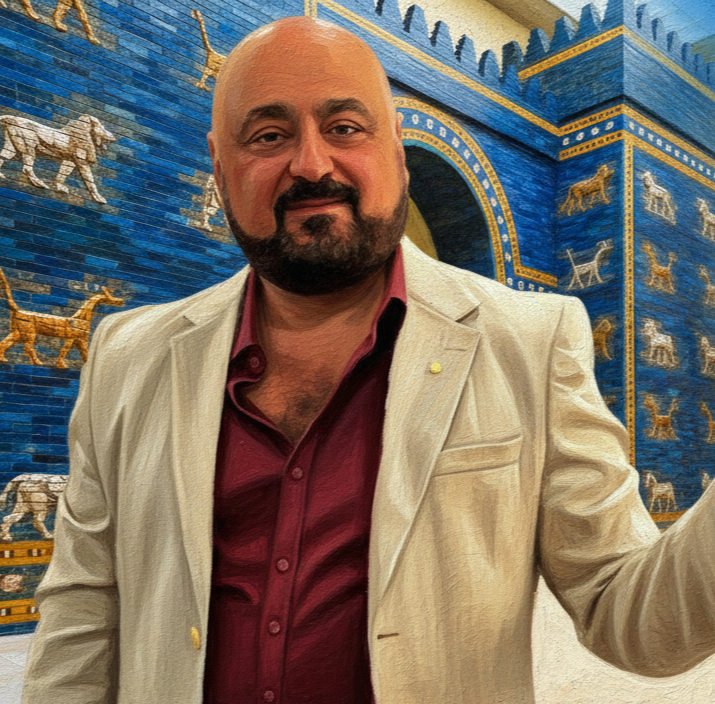
Bashar Hanna
President of the Australian Mesopotamian Cultural Association.
Arts & Community Development Specialist.
“Our identity is also shaped by thousands of years of history. Iraq is the cradle of civilisation, and many Iraqis feel a strong sense of pride in that legacy. “
Voices of iraq
〰️
Voices of iraq 〰️
1. Could you please introduce yourself and tell us about your work in the arts and the Iraqi community?
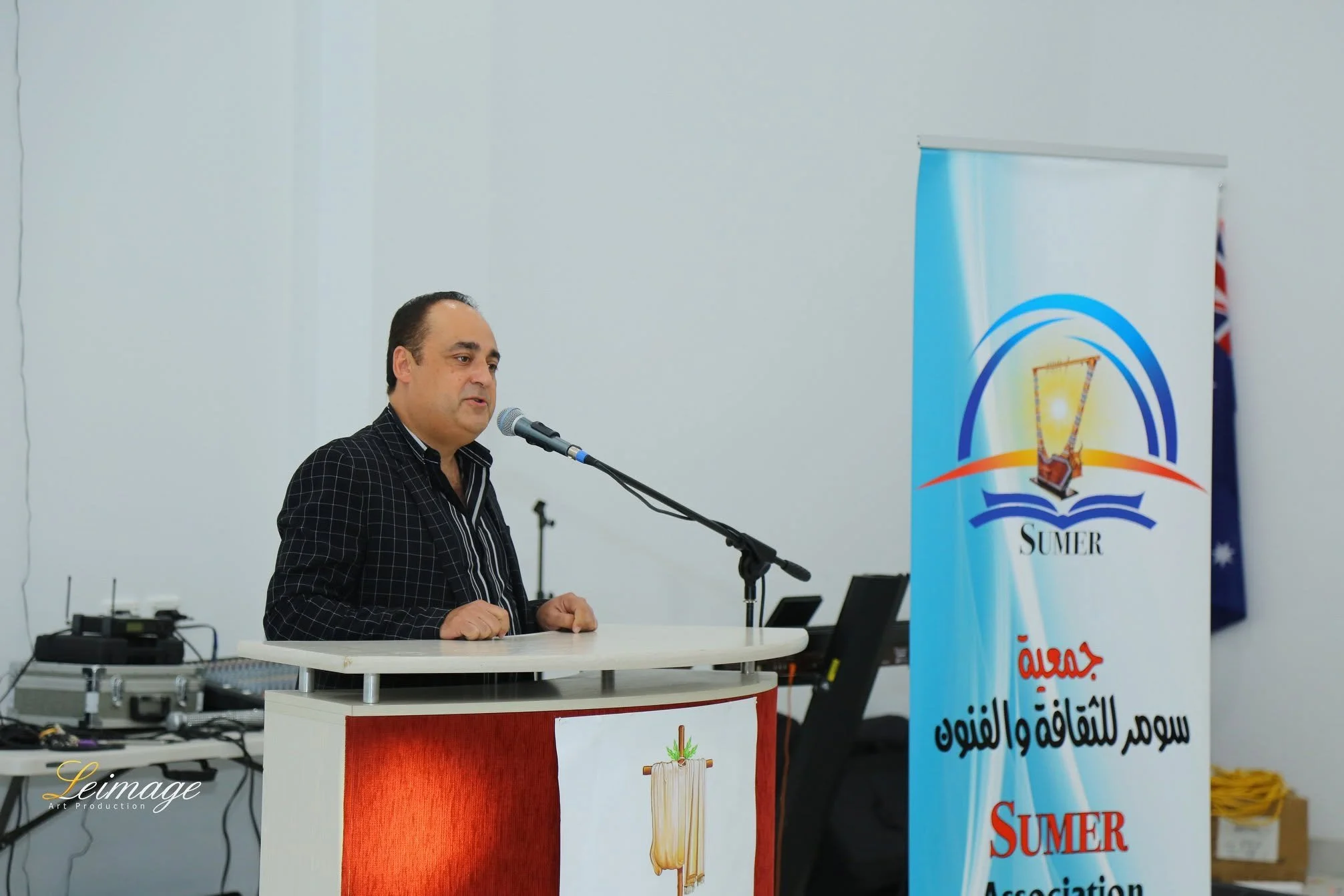
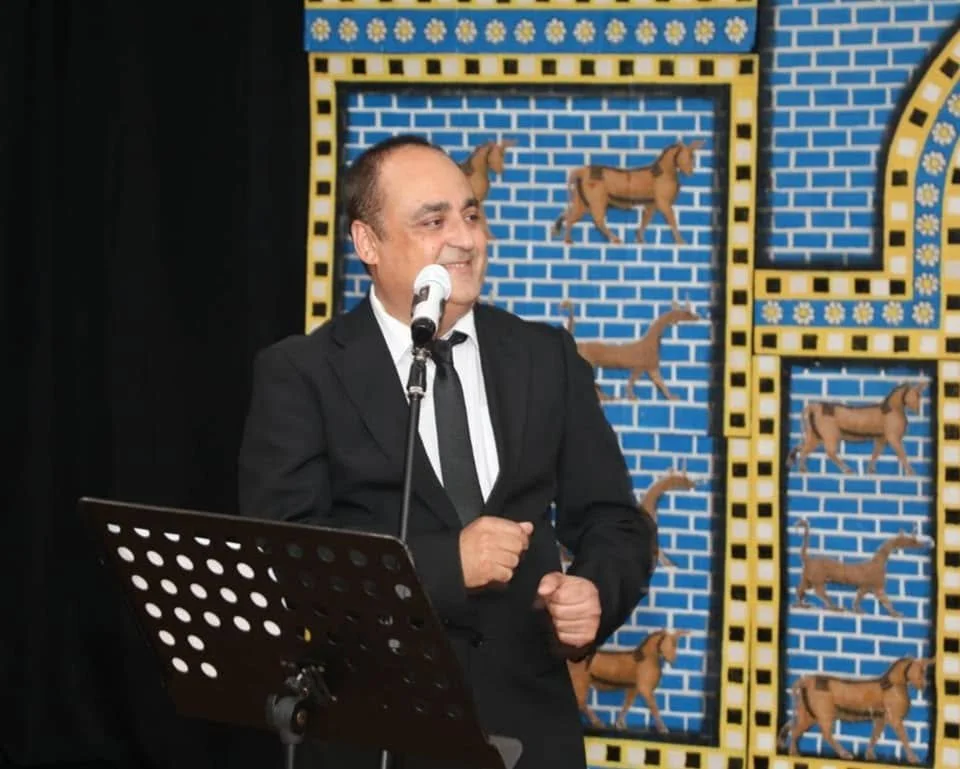
My name is Bashar Hanna. I am the current President of the Australian Mesopotamian Cultural Association and work as an Arts & Community Development Specialist.
For many years, I have been committed to using arts and culture as a bridge between communities, creating opportunities for people to connect through music, dance, theatre, festivals and cultural exchange.
Much of my work has focused on preserving and celebrating the rich heritage of Mesopotamia while supporting multicultural Australia.
I believe that culture is a living expression of who we are. It strengthens identity, builds social cohesion and creates opportunities for dialogue and understanding between people from different backgrounds.
2. As someone deeply involved in the Iraqi community, what aspects of Iraqi culture do you think Iraqis cherish the most?
Iraqis have a profound connection to family, hospitality and community. Wherever Iraqis settle around the world, they carry with them traditions of generosity, respect for elders, strong family bonds and a deep appreciation for cultural heritage.
Our identity is also shaped by thousands of years of history. Iraq is the cradle of civilisation, and many Iraqis feel a strong sense of pride in that legacy. Despite the many challenges our homeland has experienced, people remain deeply connected to their language, music, food, celebrations and cultural traditions.
3. How do music, dance and the arts come together in Iraqi celebrations and cultural events?
Music and dance are at the heart of almost every Iraqi celebration. Whether it is a wedding, a cultural festival, a national celebration or a community gathering, music brings people together and creates a shared sense of joy and belonging.
Traditional dances encourage participation rather than performance alone. People of all ages join together, celebrating not only the occasion but also their connection to one another. The arts preserve memories, tell stories and allow each generation to pass traditions on to the next.
4. Are there any musical traditions, songs or styles that you feel represent Iraq particularly well?
Iraq has one of the richest musical traditions in the Middle East. The Iraqi Maqam is perhaps the country's most recognised classical musical tradition, reflecting centuries of artistic development and emotional expression.
Alongside the Maqam, Iraq is home to vibrant regional folk music representing its diverse communities, including Chaldean, Assyrian, Syriac, Kurdish, Turkmen, Arab, Armenian, Mandaean and many others. This diversity is one of Iraq's greatest cultural strengths, and together these traditions form a remarkable musical landscape.
5. What is something about Iraqi culture that you wish more people had the opportunity to discover?
I would like more people to discover the extraordinary cultural diversity of Iraq. Many people know Iraq only through the lens of conflict, but Iraq is a country with one of the world's oldest continuous civilisations, rich artistic traditions and remarkable cultural diversity.
It is a place where different cultures, languages, faiths and traditions have coexisted and influenced one another for thousands of years. Understanding this broader picture helps people appreciate the depth and resilience of Iraqi culture.
6. Throughout your work in the arts and community, what have you learned about the importance of preserving Iraqi culture?
I have learned that culture survives because people choose to share it. It cannot simply be stored in museums or books; it must be lived through music, dance, theatre, language, storytelling and community participation.
When young people engage with their cultural heritage, they develop a stronger sense of identity and belonging. At the same time, sharing our culture with the wider Australian community strengthens mutual respect and enriches Australia's multicultural society.
7. If someone wanted to begin understanding Iraqi music beyond simply listening to songs, where would you encourage them to start?
I would encourage them to explore the stories behind the music. Learn about the different regions of Iraq, the communities that created these musical traditions and the historical events that shaped them.
Attend live performances, speak with musicians, visit cultural festivals (such as our biennial Colours of Mesopotamia Festival) and experience the music in its social setting. Music is not simply entertainment; it reflects history, identity, emotion and community.
8. From your experience, which Iraqi dance style do you feel Iraqis have the strongest connection to, and why?
Many Iraqis feel a strong connection to the Chobi, which is perhaps the most widely recognised social dance across Iraq. It is a communal dance that symbolises unity, celebration and shared identity.
What makes the Chobi so special is that it brings people together regardless of age or background. It reminds us that dance is about community as much as movement.
9. What advice would you give to dancers who want to better understand and respectfully perform Iraqi dance?
My advice would be to approach Iraqi dance with curiosity, humility and respect. Take the time to understand the cultural context, the music, the costumes and the traditions associated with each dance style.
Whenever possible, learn from experienced Iraqi dancers and cultural practitioners. Authenticity comes not only from mastering the movements but also from understanding the meaning and spirit behind them.
10. Finally, what message would you like to leave for dancers and future generations interested in Iraqi culture?
Our cultural heritage is a gift that has been passed down through countless generations. It belongs not only to the past but also to the future.
I encourage Mesopotamian people to embrace their heritage with pride while remaining open to learning from others. Every dance performed, every song sung and every story shared helps keep our culture alive.
By celebrating Iraqi culture and sharing it with the wider community, we contribute to a more inclusive, respectful and culturally rich society for everyone.
Have Questions? Let’s Talk
Send us a quick note and let’s figure things out together—we’re excited to help you reach your learning goals.