
Mesopotamian Dance
Although no written manuals describing dance have survived from the earliest periods, archaeological discoveries—including painted pottery, cylinder seals, reliefs and figurines—provide valuable clues about movement, music and ritual. By studying these objects alongside later textual evidence, researchers have begun to reconstruct the role that dance may have played in Mesopotamian society.
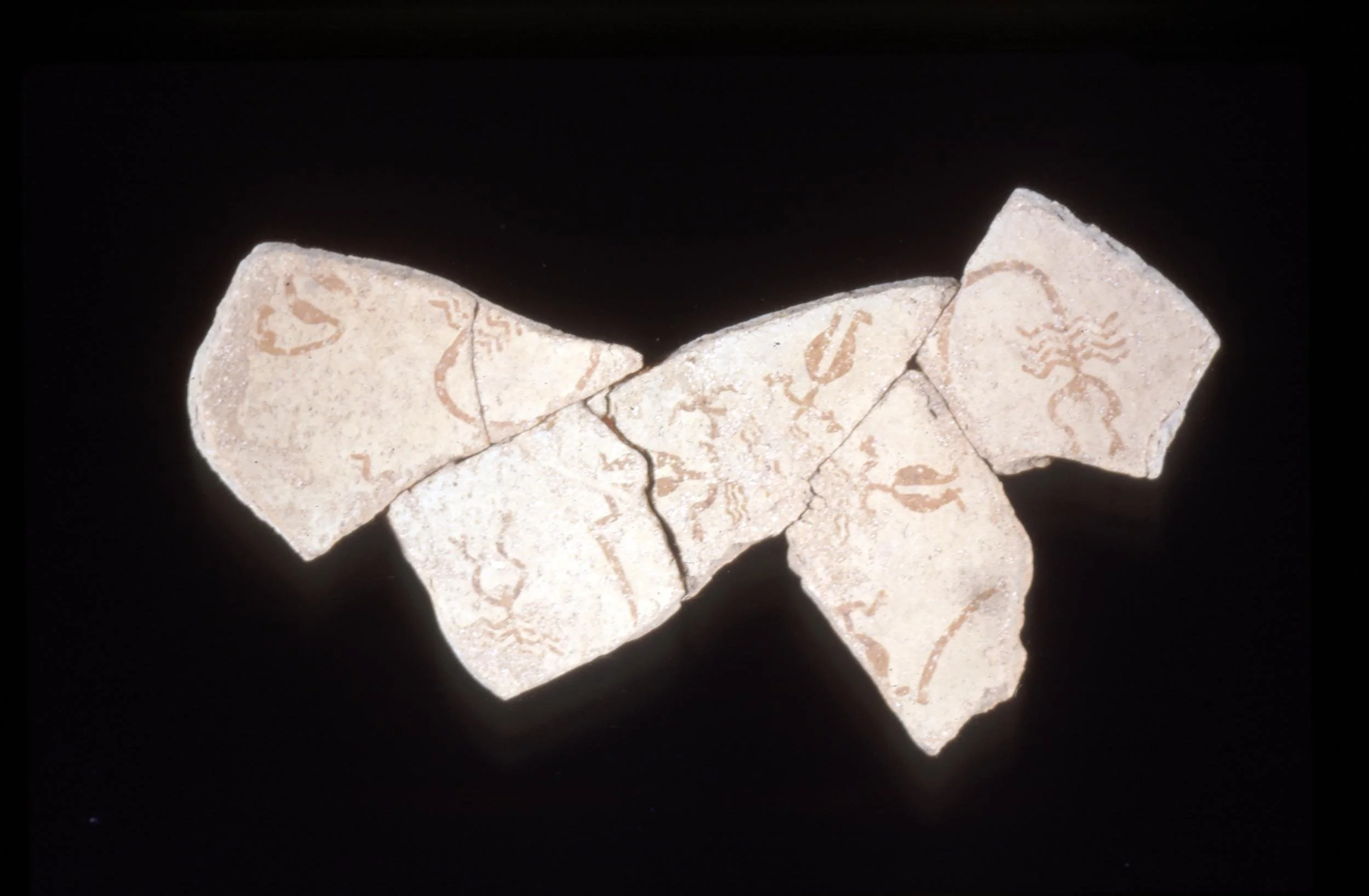
Samarra bowl
© The Trustees of the British Museum. Shared under a Creative Commons Attribution-NonCommercial-ShareAlike 4.0 International (CC BY-NC-SA 4.0) licence.
Some archaeologists have interpreted the Samarra bowl as one of the earliest depictions of dance in Mesopotamia. Dominique Collon suggests that the painted figures represent women performing a circular ritual dance.
Discoveries such as the Samarra Bowl remind us that dance has been part of human expression in Mesopotamia for thousands of years.
Although the Samarra Bowl remains one of the earliest proposed depictions of dance, visual evidence becomes increasingly abundant during the Sumerian period. Archaeological finds from cities such as Ur begin to reveal musicians, ceremonial gatherings and performances, offering a richer picture of movement and music in Mesopotamian society.
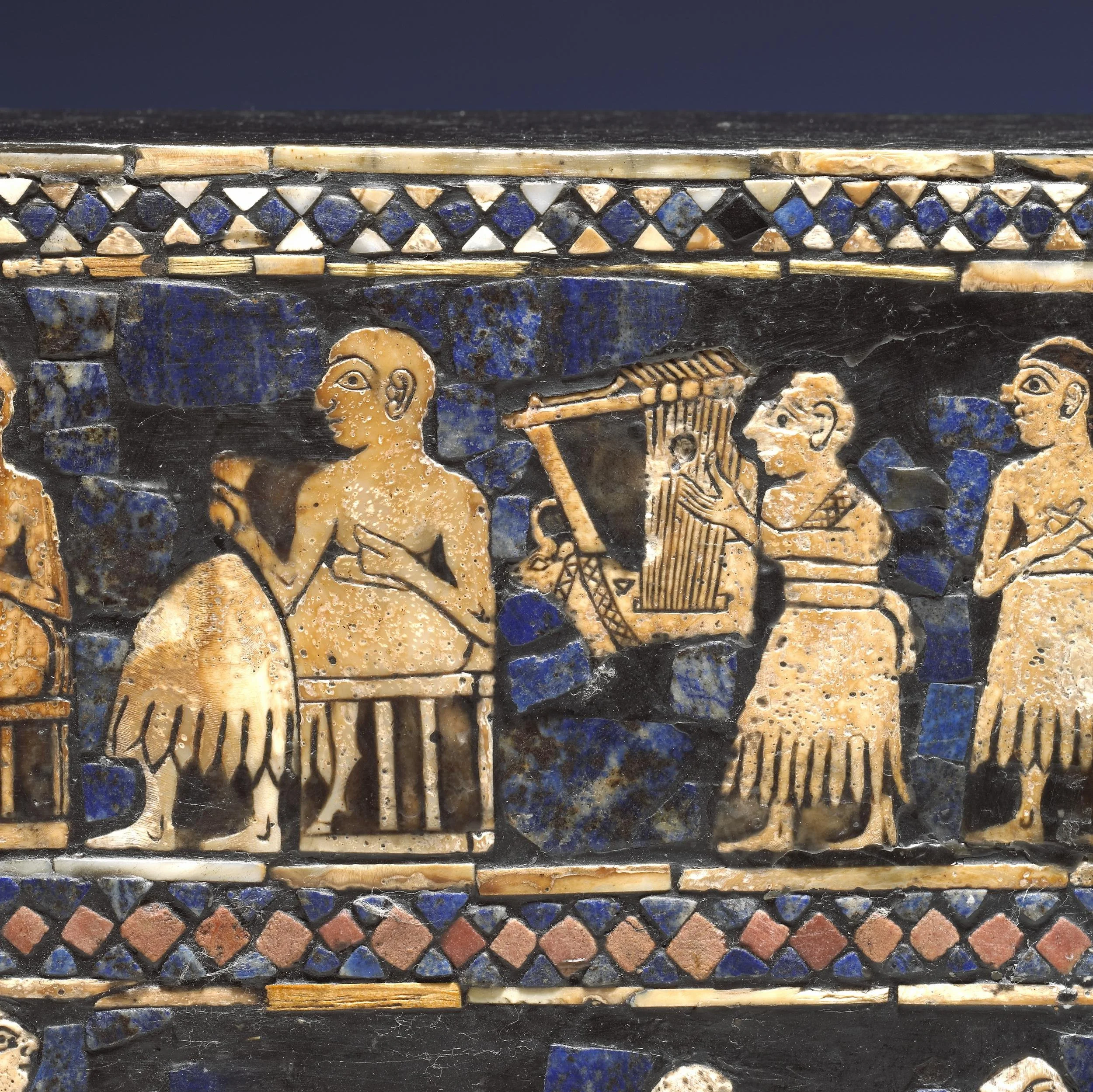
Standard of Ur
Royal Cemetery of Ur, c. 2600–2400 BCE
© The Trustees of the British Museum. Shared under a Creative Commons Attribution-NonCommercial-ShareAlike 4.0 International (CC BY-NC-SA 4.0) licence.
By around 2600 BCE, archaeological evidence shows musicians accompanying ceremonial banquets. The Standard of Ur depicts a lyre player and a singer, demonstrating that organised musical performance was already part of elite Mesopotamian society. Although dancers are not shown, music was an essential component of many ritual and festive activities.